Diseases in the Wasteland
Howdy Vados!
It’s Jonathan here with another signature DR:TX Rules Ramble, leading up to next premiere Dystopia Rising Live event FORCED TO EVOLVE! This game will be led by Jon Hearn. Each post, I’ll discuss in detail an aspect of the upcoming event, compiling the rules and lore into one easy place to read! This week, we are covering some updates to the core disease rules with the release of THE PATHOGEN PRIMER!
Notes & Updates:
TICKETS FOR OUR march event ARE ON SALE NOW!
Our EARLY BIRD promotion continues for our March tickets! If you purchase your ticket BEFORE March 7th, you’ll receive a bonus XP for FREE! If you’ve already bought a ticket with additional XP, send us an email to info@dystopiarisingtx.com for more information!
Undated Scrap Cards expired on February 1st, 2026. Back at the start of DR Live last year, we set expiration dates for all undated cards and the day finally arrived. Read more about this and how to gather scrap here.
If you had a great experience at our last event SEEDS OF CORRUPTION or had some suggestions for how we can improve, we’d love to hear from you! We appreciate your high-fives and suggestions and always want to seek ways to improve our events.
Fill out our Feedback Form!
Want to Experience the Next Event on Hard Mode? If you would like to start this next event already infected with a brand new disease, send us an email to info@dystopiarisingtx.comwith the subject line "Fungal Growth" with your player number and character name. You’ll get to start the event already involved in the plot for the weekend!
Our photos for this post were taken from previous DR:TX events by our talented Photo Team, including Heather Halstead.
Diseases in Dystopia Rising Live
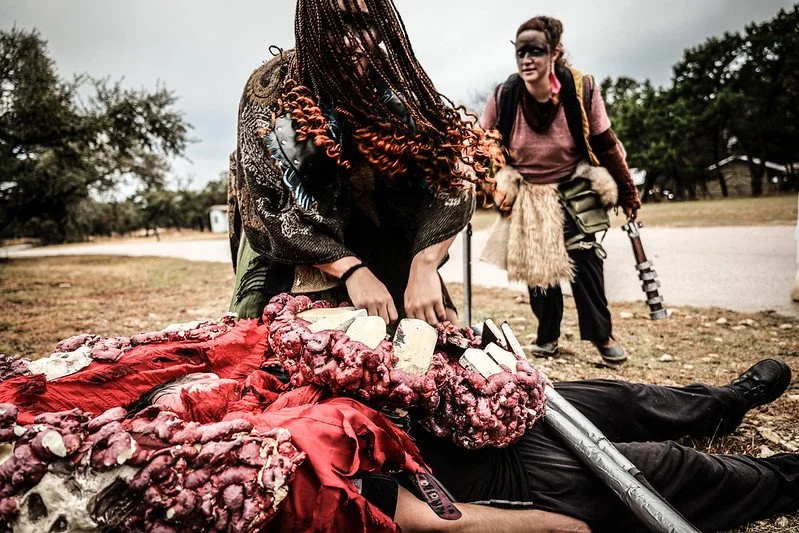
Last week, we covered some content warnings about diseases in Dystopia Rising Live. Diseases are an ever present threat of the wasteland, and can be spread in a number of ways. Like I mentioned in my last post, the very concept of the Zombie Apocalypse is a story of disease. When the Infection spread, it wiped out humanity and our survivors are those that have survived the generations since the fall. Diseases can be an insidious danger, turning communities against each other, and creating some interesting new stories of the apocalypse.
The new book, THE PATHOGEN PRIMER, updates a bunch of existing diseases and adds dozens of new diseases to threaten your survivors. As our story of Bravado continues, you’ll see more of these threats become an issue. With this new book came an update to the Player’s Guide and Guide’s Guide, moving most of the existing Disease content into the new book. This is a helpful change, as it allows you keep a mostly spoiler-free understanding of these mechanics in the world without revealing the specific nature of these diseases. Now, you are free to read ahead if you don’t mind the spoilers, but it’s not necessary to read.
For our purposes, each game must have all disease mechanics readily available at Logistics or the Public Works. This accessibility ensures that players can learn essential details about the diseases they may encounter, including the mechanical effects that influence game play, the transmission vectors that describe how diseases spread, and the role-play focuses that guide how players should act when infected. This information needs to be at Logistics so that players who have a disease know what mechanics are impacting them, and so that players researching a disease have a clear point of contact for attempting to make progress.
Researching a Disease
The first thing a player might want to do is understand a bit more about what disease is ravaging their patient. With Basic Education and Lore: Medical, any player may investigate the symptoms of a disease.
Player’s Guide, p. 84 — To investigate a disease, characters may inform Public Works / Logistics of their intent and then use Full Engagement Role-Play examining a patient with a disease by using Lore: Medical. This may include checking the patient’s heart rate; interviewing them; checking their skin for any signs of rash, blisters, or other anomalies; and checking for other symptoms. After 20 minutes examining the patient, the doctor may spend 5 Mind Points to learn more about the disease.
For each 5 Mind Points spent the doctor may learn one of the following:
Vectors of transmission
One stage of disease details (mechanics and role-play for one requested stage of the disease)
Treatment conditions for remission
Cure conditions to remove the disease at a specific stage
Immunity potential (can a person re-catch this disease?)
The requirements to learn more about a disease only requires one skill and one lore, so even a brand new player can dive into learning about diseases in game. If you actually want to help resolve the disease, it’ll usually require certain other Lores, Mind Points, items, and the Medical skill to treat. There’s even a handful of items like the Antihistocillin Spinal Spike, Surgical Suite, and the Dr. Ottoman’s Disease Control Kit that interact with diseases, and even a few ways for the shady types to purposefully spread a disease.
However, most of the function of dealing with the disease will be in the write up of that disease itself, which will be at the Grave Council Annex (Ops) if you need to ask questions of a staff member.
core diseases
The main diseases in the Pathogen Primer represent the network standardized diseases. In general, these are the most common types of diseases you’ll encounter during a DR:TX event. While the Pathogen Primer outlines some very scary Apocalyptic Diseases and even mechanics that our team can use to create Custom Diseases, most threats will inflict and hand out these core disease mechanics.
Fun fact, while the core diseases could be basically split between ‘fast acting’ and ‘slow acting’ diseases, none of the diseases in this book can be transmitted from player to player by touch or physical contact. They all need some interaction with a plot, a narrative trigger like a Zone of Mechanics, or the Inflict Disease threat skill or particular Skill Call like an AOE or By My Voice.
Transmission between player characters is a sensitive element and must be handled carefully. Network-standardized diseases do not spread directly from player to player through casual proximity or contact. Instead, they are contracted through defined environmental exposure, creature interaction, or explicit narrative triggers. This avoids forced isolation of players, reduces negative play experiences, and keeps transmission tied to story rather than social proximity. — Pathogen Primer, p. 13
Most core diseases range in danger from that causes inconvenience and pressure on the life of the infected, to something is mostly dangerous if left ignored, to the most deadly and terminal plagues. You can expect to see more of these diseases from this point forward, and I expect that we will see a few new threats capable of spreading some of these diseases, or a plot line that includes a disease as a danger.
The Elements of a Disease
Each disease in the Pathogen Primer outlines a few common aspects of each disease. Make sure you check this book if you are a Doctor type character, as many of the common cures and treatments have changed! For instance, the material costs to cure the Radiation Rot disease has switched to a different radio-protective Herb than it used to require.
Let’s cover each part:
Overview - Each disease will give you a brief introduction and a bit of story prompts about the disease.
Causes & Transmission - The vectors of a disease will be listed for each disease, and detail exactly how it can be transmitted. The more dangerous diseases can even spread via a few mechanical cues, like an AOE call or Inflict Disease trigger, or it could be a behavior or choice you make in game that causes the disease to spread. There might actually be consequences of ‘licking the plot’ now…
Symptoms & Progression - How a disease progress is often visible and noticeable. It might be a tremor in a limb, a sickening rot, or just erratic behavior. This section will detail how quickly the disease advances and how it progresses as it worsens.
Five Stages of the Disease - Each disease has five stages progressing from the initial infection to the terminal stage. Very few diseases are cured upon death, but a few Strains are immune to specific diseases. Each stage will detail the mechanical affect on your character and a few role play notes for how to represent the disease in game. Generally, each stage of the disease worsens or stacks, leading to some truly unfortunate stacking debuffs.
Duration Between Stages - Many diseases advance at the end of the game. If you are still infected with the disease, we will notate it in the database for the next event. Diseases can advance faster, particularly the more dangerous and deadly variants. Often there can be a trigger of an activity that can advance the disease in addition to the inexorable march of time.
Treatment & Recovery - Doctors pay attention! This section will outline what procedure needs to be done to cure a disease at each of the five stages. This will outline Skills needed, Mind expenditures, items needed, and a brief role play prompt to guide you in game. Generally, the higher the stage of the disease, the more expensive the cure, and you’ll often need Profession Skills or Master Skills to make an impact. Some diseases don’t even completely cure in one treatment, as it only reduces the current stage to a lower level.
Role Play & Costume Notes - If a disease has a visible cue, the book will detail some ways to use costume and makeup to represent the disease, or notes for role play if the disease manifests more commonly as strange behaviors.
Guide’s Notes - This section covers any story notes or ideas to include the disease in a game. There could be some spoilers in these sections, but it can also provide context for how the disease might appear in a game.
The Pathogen Primer adds over 15 new diseases to Dystopia Rising Live! You’ll be able discover more about these diseases in game when you encounter a patient that is infected, but I expect some of this information to spread quickly from the doctor community in game.
Palliative Care
The Pathogen Primer adds a brand new function for dealing with a disease. While not every disease has this option, many diseases have a new method of treating a disease. Palliative Care presents a cheaper, but less effective method of managing the symptoms of a disease. This mechanic will usually prevent the advancement of the disease at the end of the event or upon another triggering mechanic of that disease, but it does not cure or alter the current Stage.
This presents a new way to either buy yourself some time to deal with a disease during a later event, which is particularly useful for the diseases that have expensive components for treatment. It also allows a character to purposeful sustain a disease like Bad Brain or Radiation Rot, useful for those of the Cult of Darwin that want to express their piety under Savannah’s caress.
Now, let’s get to a discussion on a disease you’ll see during our next event.

+ + + SPOILER WARNING + + +
If you don’t want to know more, stop reading now!
The next section will cover some specific mechanics of one of the diseases you might encounter during our next event. If you’d prefer to experience this role play of discovering this disease in game, I recommend stopping here. You’ve been warned!
+ + + SPOILER WARNING + + +
The Bastion project
During our March event “Forced to Evolve”, a dangerous disease will be part of the narrative of the weekend. There will be several ways to contract this disease during the game, from skill calls from threats, to zone of mechanics, to unique props you’ll see on certain types of NPCs and around the site. We covered some about this last week, so let’s get into a bit of the background to this disease in our setting.
As found on page 28 of the Pathogen Primer, a mostly-new disease is ready to ravage the wastelands of Bravado.
Grave Bloom Syndrome is a fungal and necrological disease born from exposure to spore-carrying Critters, fungal Zombies, or contaminated Morgues corrupted by Glow Shroom infestations. When the Infection inside the body comes into contact with active Glow Shroom spores, it misinterprets the fungal presence as regenerative tissue and attempts to merge with it. The result is a grotesque form of symbiosis where the body begins sprouting fungal matter in place of damaged or dying flesh. Early on, this presents as what survivors call “the Bloom,” a harmless-looking patch of faintly glowing mold that appears over scars or cuts. Within days, it spreads internally, rooting itself in muscle, lungs, and organs as the Infection and fungus fight for control. Entire settlements have been lost when a Morgue became compromised by Glow Shroom growth, turning the dead into luminous spore farms and the living into walking gardens.
Mostly new you say?
Fun fact: an early version of this disease was actually present during a previous DR:TX event as part of the Illusions of Civility plotkit last year. It didn’t really get out past a few specific situations, but this addition to the Pathogen Primer is a result of that world kit and the interactions that happened across the network.
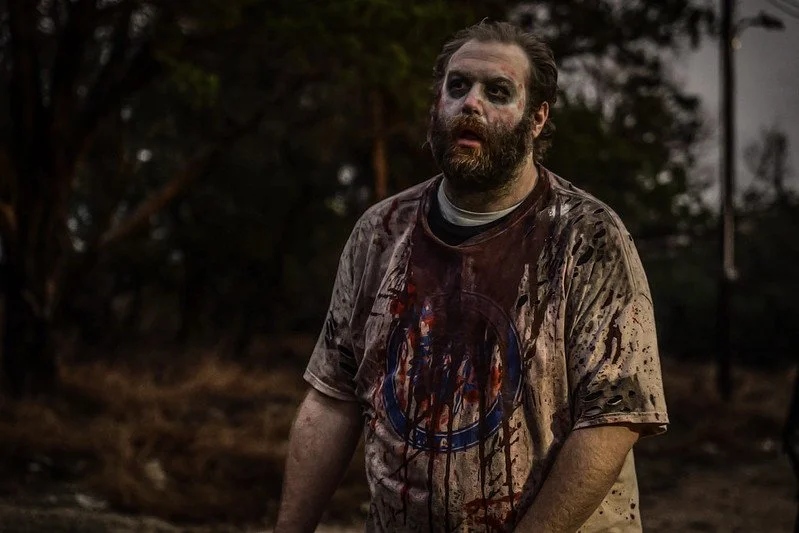
During the first events of Dystopia Rising Live, including our National Event “Downfall” set in Bastion, our players got to interact with the Wells Society and a new and mysterious Glow-Shroom project. Our local watcher of this National faction, Dr. Ezekiel Abbott hosted a series of educational lectures about the project, which planned on purposefully introducing the fungal growth known as Liberum Radicalis, or Glow-Shrooms into the Exclusion Zone between Bravado and Bastion. Since then, the BASTION PROJECT has been a continued experiment of the group, focused on restoring life and sustainability to the wasteland around the nearby town of Bastion.
Here’s a bit of what is known about the Glow-Shrooms:
Liberum Radicalis is a black fungus that reproduces by spores. The Liberum Radicalis (Glow-Shrooms), possesses a remarkable ability to absorb and utilize radiation. This unique trait allows them to thrive in environments that would be hostile to most forms of life. They harness radiation through a process akin to photosynthesis, converting gamma radiation into chemical energy, which produces a milky blue glow within the plant. This energy is then used to fuel their growth and metabolic functions, enabling Glow-Shrooms to flourish in areas with high levels of radiation. Their extraordinary capability not only highlights their resilience but also opens up potential avenues for bioremediation in contaminated environments. While Glow-Shrooms are stable in a controlled environment, the Infection that courses through them does exhibit a capacity for rapid mutation, a trait that significantly contributes to their resilience in harsh environment variables. This mutation allows them to adapt swiftly to varying levels of radiation, pollutants, and other extreme conditions that would typically inhibit or destroy other forms of life. The genetic flexibility of Glow-Shrooms enables them to modify their DNA in response to their surroundings, leading to the development of new traits that can better withstand environmental stresses.
These strange mushrooms once escaped into the tunnels below Bravado, and were only stopped by collapsing the deepest areas of the Facility to stop the spread of the fungus. Long term exposure to the fungus can often cause hallucinations that result in people seeing others around them as zombies, or a curious passive compliance as they simply lose a part of themselves underneath the insidious grip of the Infection being sent into overdrive. The Glow Shrooms themselves are an example of the ebb and flow between radiation and the Mortis Amaranthine, and the delicate balance that can be disrupted if radiation or Infection is allowed to get out of control.
Despite the danger, the Glow-Shrooms have actually worked as the Wells Society intended in the Exclusion Zone. The fungal growths have actively improved conditions within the radioactive wasteland, particularly closer to Bastion, where they are purposefully cultivated and maintained. As long as the groves are carefully tended, it is possible that the radioactive nightmare of the Exclusion Zone could be restored in a few short years. It has already created new areas of arable farmland for Bastion, and improved conditions of the neighboring town in the last year. The Glow-Shroom has even adapted to the withering heat of the Burning Season, and has proved that their resilience will allow the Bastion Project to continue.
However, there have been recent sightings of mutated animals outside of the Exclusion Zone, each with the curious affliction of infested growth and the familiar blue mushrooms. The Wells Society continues to attest that they have taken the proper precautions to prevent the spread of the blue mushrooms, but something has happened. Let’s talk about what this means from a mechanic perspective.
Grave Bloom Syndrome
For our local purposes, Grave Bloom Syndrome is primarily contracted by interacting with the fungal Glow-Shrooms that are found throughout the Exclusion Zone between Bravado and Bastion. The newest complication of this hazard comes in the form of the updated disease known as Grave Bloom Syndrome. You read more about this disease in the Pathogen Primer, starting on page 28.
Because of the specific manner that this disease is spread, it is virtually impossible for any character during this event to progress past Stage 3. Now, you could encounter NPCs at a more advanced stage, but the immediate threat to players is not immediately terminal.
Early symptoms include localized irritation and glowing lesions forming around open wounds. The infected area smells faintly of damp soil and emits a soft bioluminescent shimmer, especially in darkness. The host may experience fatigue, shallow breathing, and mild hallucinations as the spores begin affecting oxygen intake and neural activity. As the condition advances, the glow intensifies, and the Infection begins producing fibrous fungal threads to “seal” wounds. These threads grow from pores and scars, creating living floral patterns that move slightly with the host’s pulse. Mid-stage cases suffer constant shortness of breath, difficulty speaking, and coughing fits that release faint spore clouds capable of triggering low-grade hallucinations in nearby individuals.
In advanced stages, the host’s body becomes overrun by the fungal network. Mushrooms and mold sprout visibly from the mouth, eyes, and joints as the Infection is slowly suffocated. The body stiffens as fungal mycelium replaces connective tissue, and blood flow becomes viscous and dark green. Death results from respiratory failure or systemic fungal takeover. If the body is left within an active Morgue, the Glow Shrooms rapidly propagate across the corpse, spreading spores into the environment and reawakening it as a spore-laden Zombie or stationary fungal husk. — Pathogen Primer, pg. 28
Here’s a sneak peek of the Stages and mechanics of this disease:
Stage 1 (Onset):
Exposed areas become irritated, with glowing lesions forming around scratches or cuts. Mild fatigue and respiratory issues occur. Maximum Resolve is reduced by 1.
This level of the disease is mostly an inconvenience, but lowering your Resolve will make it more likely you could gain a Fracture faster than you expected. This could also mean that powerful equipment and Skills that need a Resolve to use might be a bit more precious.
Stage 2 (Mild):
Irritation and lesions spread, and serious wounds ‘scar’ with luminous fungal growth. Mild hallucinations come and go, especially after exertion. Maximum Mind and Body are both reduced by 5 points (minimum 0 Mind, 1 Body).
The less XP you’ve spent on Mind and Body, the bigger the danger this Stage can be. Losing 5 Body out of a pool of 40 is much different than losing 5 Body of your maximum pool of 5. This will be particularly dangerous for Elitariat and Devoted that haven’t raised their starting Body, as your new max will be ONE!
Stage 3 (Moderate):
Fungal growth continues to spread internally and externally, causing shortness of breath and coughing fits that expel hallucinatory spores. Every three hours when around at least two other Lineages, call ‘Area of Effect, Hallucinate 1 Minute’. The afflicted can no longer expend Resolve for any skill or mechanic activated willingly.
You can’t use Resolve at all at this point. Ouch. This is the maximum stage you should be able to reach during this next event. The Hallucinate keyword has no actual mechanics, but this disease usually manifests as hallucinating everyone around you is a zombie. You might hear voices from the Grave Mind, or watch your friends rotting to death in your visions.
Stage 4 (Severe):
The continued growth of fungus begins to cause physical impairment, causing chronic pain and difficulty moving. Every 10 minutes, suffer 10 seconds of Agony. Entering a Mortis or Morgue space requires a call of ‘By my Voice, within the Morgue/Mortis, Inflict Stage 1 Grave Bloom Syndrome’.
This is a devastating weakness, as it means that simply entering the Morgue can spread the disease to those within, making Necrology and other Mortis procedures extra dangerous. Given that all the levels stack, you’ll not even be able to use most Lineage Advantages.
Stage 5 (Terminal):
Within one hour of reaching this stage or entering play, the afflicted collapses and dies unavoidably, losing Infection as normal. Upon returning from the Mortis, the afflicted drops to Stage 2 Grave Bloom.
Do not pass Go. Do not collect $200 Brass. Like many diseases, death is not even the end of the suffering, as it only resets the Bloom to a lower stage. However, at this point, you’ve likely had this disease for at least two months or more, so there should be plenty of time to intervene before the diseases progresses to this point.
Roleplay Notes:
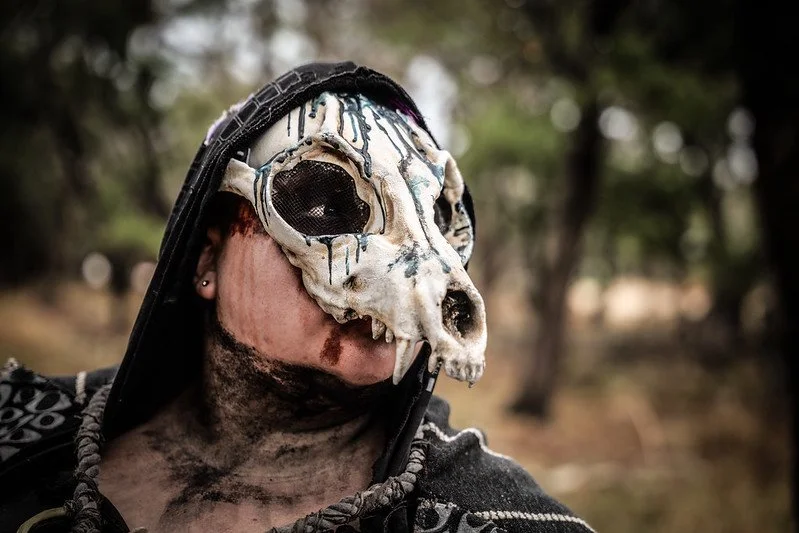
Begin by touching or scratching at one area of your body, glancing at it as if it itches or burns. Occasionally sniff the air or comment on an earthy scent no one else notices. As it worsens, move slower, as though weighed down or short of breath, coughing softly and rubbing at your chest. For costuming, apply faint green or brown shading to one side of your neck, arm, or hand to mimic the start of fungal bloom. Midway through, add subtle bioluminescent accents using glow paint or reflective makeup on scars or visible skin, suggesting glowing spores spreading beneath the surface. Act distant and tired, with small pauses in speech or staring fits as hallucinations set in. In later stages, let your movements stiffen, occasionally tilting your head as if hearing whispers. For final moments, tremble gently, touch the fungal markings with wonder, and go still, showing the Infection surrendering to the Bloom.
If you want to know more, take a look at the Pathogen Primer. We’ll keep a few of these things hidden behind the veil for now, but if your character researches this disease in game, you can simply come to Ops and jot down some notes for how to proceed.
Wrap Up
That’s it for today, Vados.
We hope that you will come join us for our next event, FORCED TO EVOLVE! How will you survive the Grave Bloom? How will your characters encounter this insidious threat? Will you find yourself trapped in a cloud of spores, or will a vomiting zombie spray infectious disease upon you as you bleed to death? What preparations will you take? How you you keep yourself safe? We are excited to explore these themes of survival in our next event, and hope you are excited to uncover the mystery beneath this affliction. Why has it spread so quickly? What are the consequences of not understanding the danger of this disease?
Let’s find out together! See you soon, Vados!